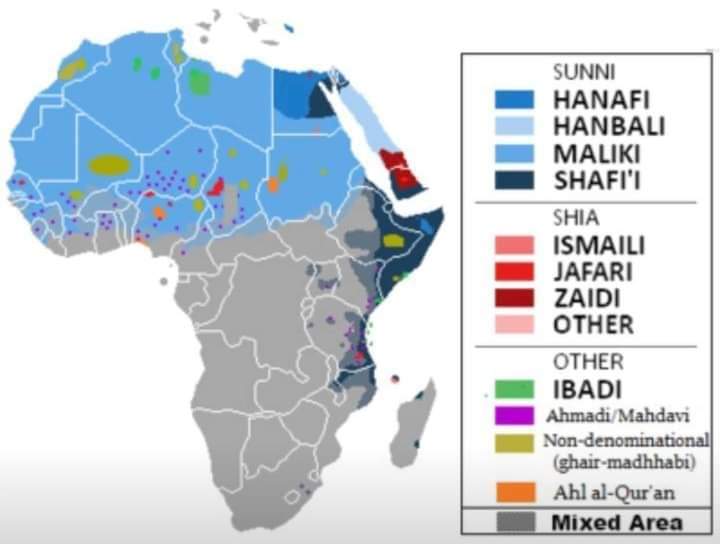
Why peace between Iran and Saudi Arabia could be consequential in Africa.By Amb Abdullahi BindawaWhen President Obama signed the Iran Nuclear Deal in 2015, I was elated. Having researched on the sectarian rift between Iran and Saudi Arabia for my investigation, I knew what the deal meant for peace in the Middle East.Unfortunately, President Trump had later reversed the deal. The set-back escalated regional tensions. The recent Chinese brokered deal while surprising to many pundits, could prove positive for regional peace.Also, any peace between the two regional powers could have positive ramification on Africa.How?To start with, Iran and Saudi Arabia are self-declared leaders of the Shia and Sunni sects of Islam respectively. While the latter sect forms over 80% percent of the global population of the faith, the former covers less than 20%. None of them is monolithic.The 7th century schism that had resulted from disputes on who was the rightful successor of Prophet Muhammed (SAW), had later died down as Sunnis and Shiites lived “peacefully” among themselves.However, the 1979 revolution and the rise of the Mullahs in Iran had given Shiites global leadership that was political and revolutionary in nature.And so what?The missionary efforts of the Iranian regime and its support of other Shiite communities in the Middle East and elsewhere over the decades has led to some religious revival and growth of Shiite Islam.In Africa Shiites populations that were either persecuted or were unrecognised, have become more vociferous and assertive of their faith. In West Africa in particular, the numbers of Shiite adherents have increased significantly.One research cited by the Wall Street Journal in 2016 gave interesting figures. Nigeria had 12 % of its Muslim population identity as Shiite. In Chad, it was 21% and Ghana 8%. Some of these states had “almost” no Shiite communities in 1980. Tanzania has 20% of its Muslim populations identifying as Shiite. Egypt also has “significant” minority.Despite these, the Shiites minority have faced overt persecution and antagonism in some of these countries. In Nigeria and Egypt, the sect has had its leaders or adherents jailed for either engaging in protests or preaching their faith. States like Chad are still wary of the group. Interestingly, these states are majority Sunni.Furthermore, Iran and Saudi Arabia have over the last decades supported their sides of the divide in Africa, just as they do in the Middle East. This has exacerbated tensions and security threats in some African states.If the peace deal is able stand the test of time therefore, Africa may benefit from its fruits—peaceful co-existence between different Islamic sects in the continent.Many more…African UnionEcowas – CedeaoThe Fund for PeaceMinistry of Foreign Affairs, NigeriaInternational Symposium on Security and Peace (ISSP) 2023Office of the National Security Adviser, State House, Abuja.African Union Youth ProgramMinistry of Defence, Ship House, AbujaURI Center for Nonviolence & Peace StudiesNational Defence College Abuja NigeriaUnited States Institute of PeaceNigerian Defence AcademyCreative Associates InternationalDepartment of State ServicesUnited Nations Office for West Africa and the Sahel – UnowasNigeria Army University-BIUUnited Nations Security Intelligence Services – UNSISNational Institute for Security StudiesEU International PartnershipsNigerian NavyUnited Nations NigeriaDefence Headquarters NigeriaWorld Bank AfricaDaura EmirateKatsina Emirate CouncilBelow: map showing different Islamic sects in Africa.
By:
Posted in:
 soloheatdanali.business.blog